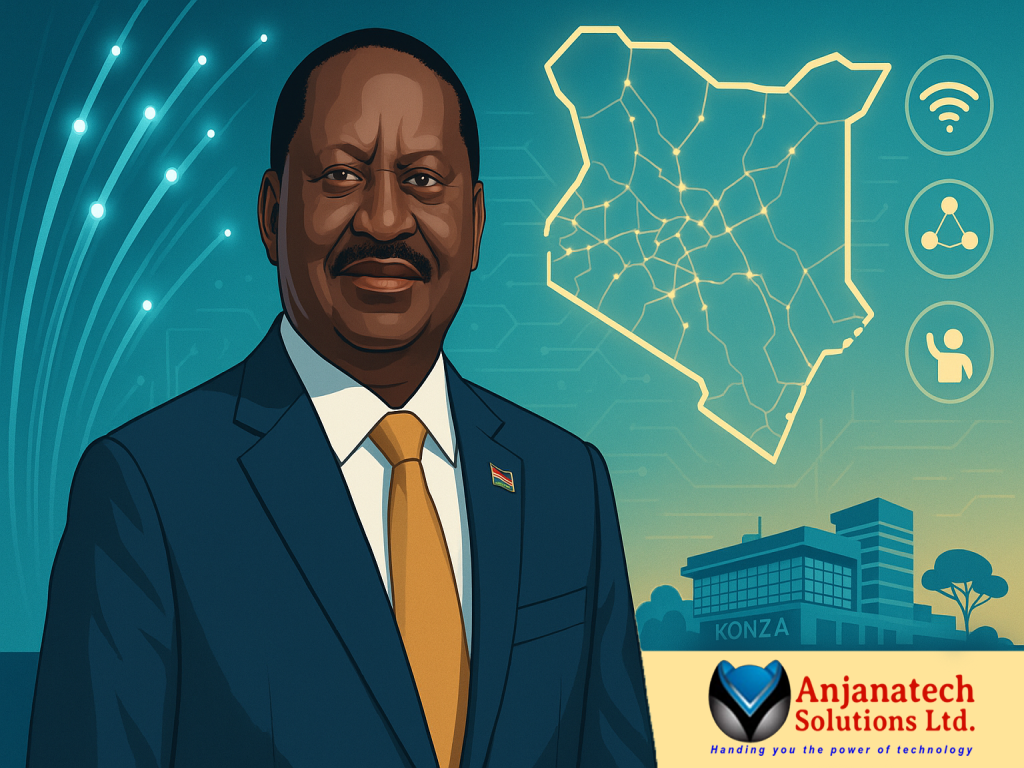
Few Kenyan leaders have shaped the country’s development discourse as much as Raila Amolo Odinga. Known for his decades-long political influence and leadership, Raila has been at the center of Kenya’s major transformations — from multi-party democracy to economic modernization.
While his political career often takes the spotlight, his indirect yet significant contributions to Kenya’s technology and digital infrastructure deserve equal attention. During his tenure as Prime Minister (2008–2013) and through his continued advocacy for innovation and youth empowerment, Raila helped lay the groundwork for Kenya’s thriving digital economy.
💼 A Leader with a Vision for a Connected Kenya
When Raila Odinga became Kenya’s Prime Minister in 2008, the global economy was already shifting toward a digital era. Internet access was expensive, slow, and limited to major cities. At that time, Kenya relied heavily on costly satellite connectivity for its internet — a barrier for business, education, and innovation.
Recognizing the importance of ICT in national growth, the coalition government under President Mwai Kibaki and Prime Minister Raila Odinga prioritized digital transformation as part of Kenya Vision 2030. Raila’s office worked closely with the Ministry of Information and Communication to make technology a driver of economic and social progress.
🌐 Supporting the Fiber-Optic Revolution
One of Raila’s most notable contributions was his support for the fiber-optic cable projects that transformed Kenya’s digital landscape.
Before 2009, Kenya’s internet backbone depended on expensive satellite links, making online services slow and unaffordable. Raila’s administration championed two major undersea cable projects:
-
The TEAMS Project (The East African Marine System) – a public-private partnership initiated in 2007 and completed in 2009, linking Kenya directly to global internet networks via the United Arab Emirates.
-
The EASSy Cable (Eastern Africa Submarine Cable System) – completed in 2010, connecting multiple East and Southern African nations to the international internet grid.
Through policy support, inter-ministerial coordination, and investment facilitation, Raila helped ensure these projects were prioritized.
💡 Result: Internet costs dropped by over 90%, speeds increased, and connectivity spread beyond Nairobi — enabling the growth of Kenya’s tech sector, digital jobs, and online education.
🏫 Promoting ICT Education and Innovation Hubs
Raila also emphasized STEM education and youth empowerment through technology. His leadership helped expand ICT programs in public universities and technical institutes, encouraging young Kenyans to pursue careers in computing, engineering, and digital innovation.
During this period, the government:
-
Supported the Digital Villages Project (Pasha Centers) to give rural communities access to computers and internet services.
-
Encouraged the rise of innovation hubs like iHub (founded in 2010), which became a launchpad for startups such as Ushahidi and BRCK.
-
Promoted the inclusion of ICT in the national education curriculum to prepare youth for the evolving digital economy.
These initiatives created a strong foundation for Kenya’s reputation as the “Silicon Savannah.”
🏙️ Laying the Groundwork for Konza Technopolis
Another milestone during Raila’s tenure as Prime Minister was the planning and groundwork for Konza Technopolis, envisioned as Kenya’s flagship smart city.
Conceived under Vision 2030, Konza was designed to be a hub for innovation, ICT research, business process outsourcing (BPO), and software development. Raila was among the early political champions of the project, promoting it both locally and internationally as a symbol of Kenya’s digital future.
While the project has faced delays, its vision remains a powerful representation of the country’s long-term digital ambitions.
🧠 How These Initiatives Shaped Kenya’s Digital Ecosystem
The ripple effects of Raila Odinga’s technology-related efforts are evident across today’s Kenyan digital landscape:
-
Affordable Internet Access: The fiber-optic infrastructure he supported made broadband internet accessible to millions.
-
Startup Growth: Lower connectivity costs and an open innovation culture led to the rise of startups like M-Pesa, Twiga Foods, Sendy, and Sokowatch.
-
Digital Government: E-government services such as eCitizen and Huduma Centers were built on the improved ICT backbone established during this period.
-
Tech Talent Development: Universities and hubs continue to produce skilled developers and innovators powering Africa’s digital economy.
🔍 Balanced Reflection: Raila’s Long-Term Tech Legacy
Raila Odinga may not be remembered as a “tech leader” in the traditional sense, but his tenure as Prime Minister coincided with — and helped shape — Kenya’s most transformative digital era. His policy support, advocacy for innovation, and commitment to youth empowerment contributed significantly to the foundation upon which Kenya’s digital success now stands.
From the arrival of undersea cables to the concept of Konza City, Raila’s influence remains woven into Kenya’s tech story — a reminder that visionary leadership can accelerate digital progress.
💡 Takeaway
Kenya’s digital revolution didn’t happen overnight. It was built on years of infrastructure planning, policy vision, and leadership that valued innovation.
Raila Odinga’s contributions — though often indirect — played a key role in setting Kenya on the path to becoming one of Africa’s leading digital economies.






No Comments yet. Be the First to Leave a Comment